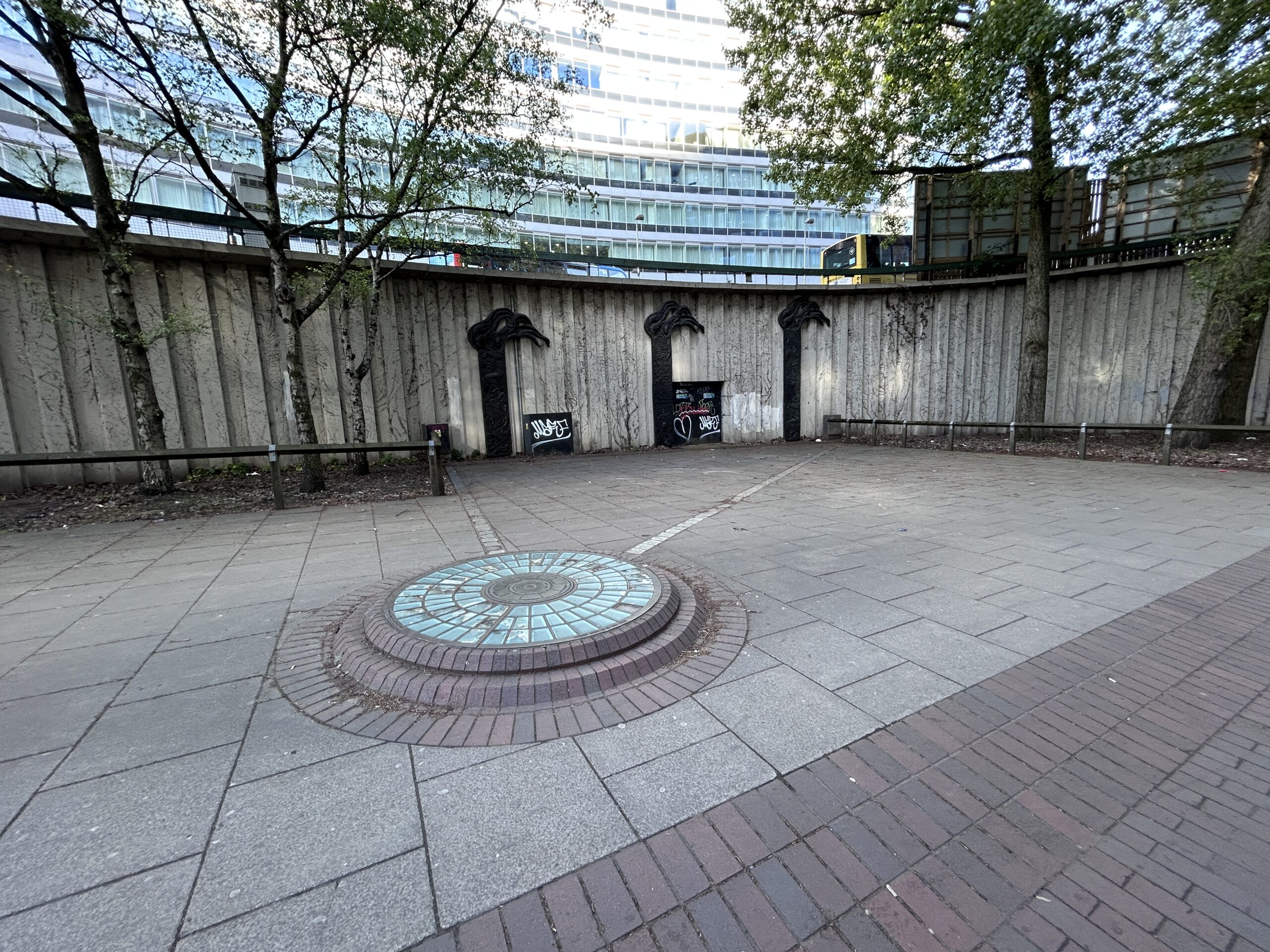
During my commutes to and from Manchester, I’ve frequently found myself pondering a unique public space and its captivating artworks. This area seems somewhat enigmatic; there is little information available about the significance, history, or true meaning of the artworks on display.
Over the last 15 years, I’ve often promised myself that I would look into this space, only to forget as soon as I pass by it. It’s safe to say that I’ve procrastinated long enough. I hope you enjoy my brief exploration into this topic.
Where?
The location is a small area of space situated between the approach to Piccadilly Station and London Road.
What is it?
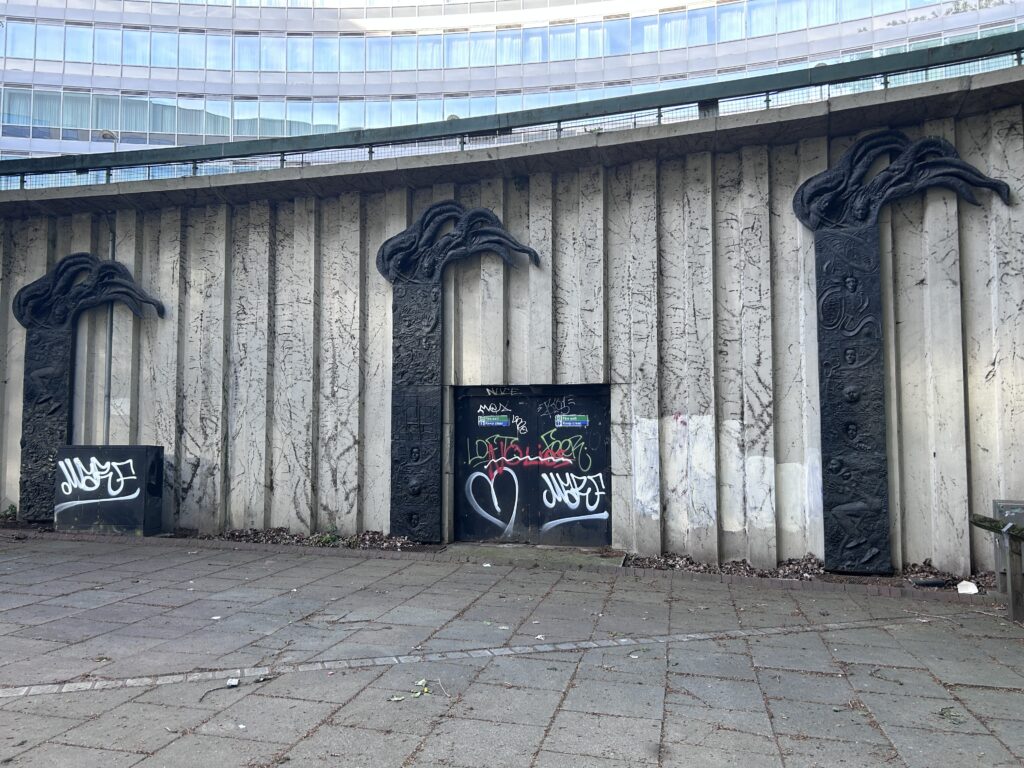
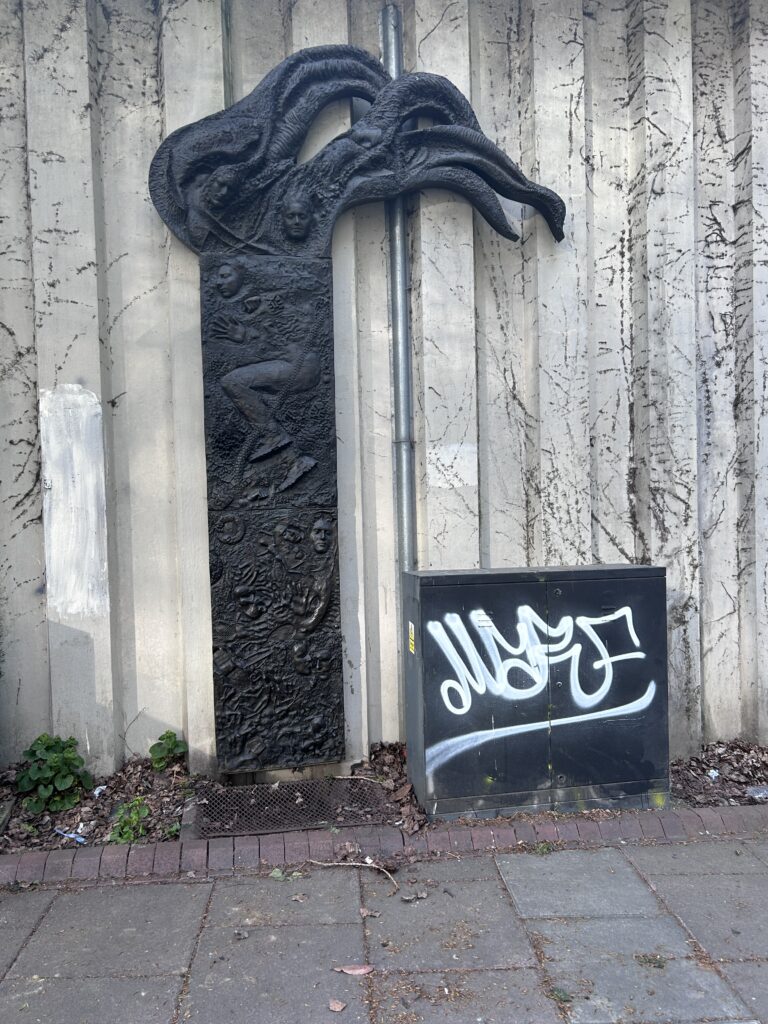
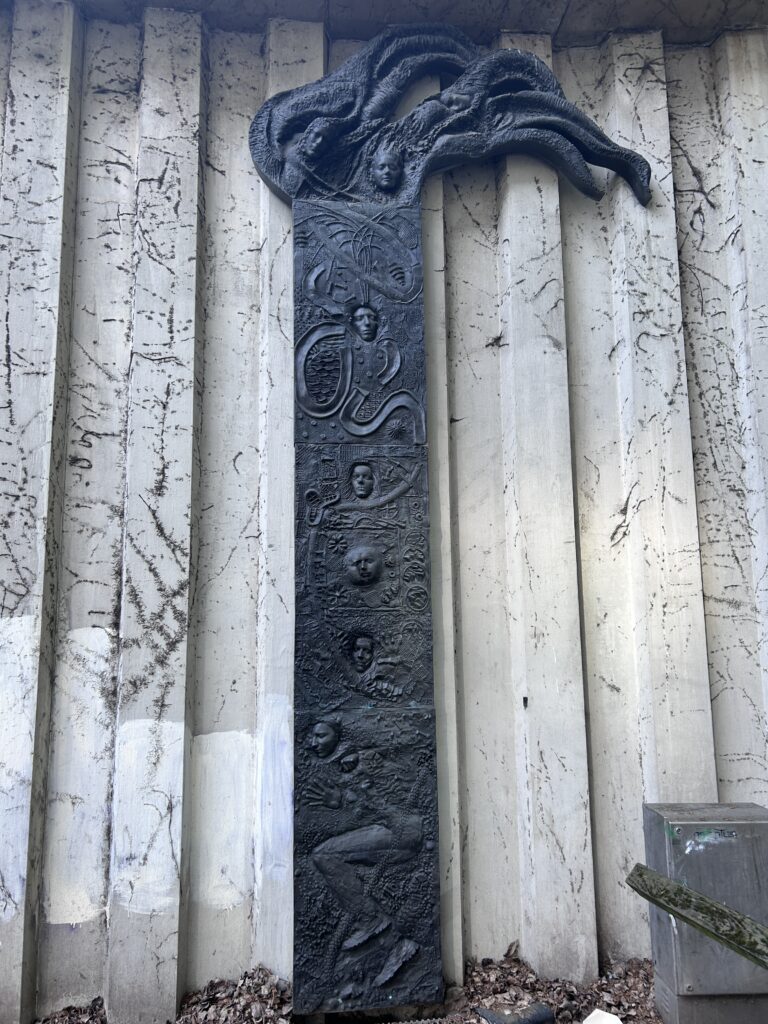
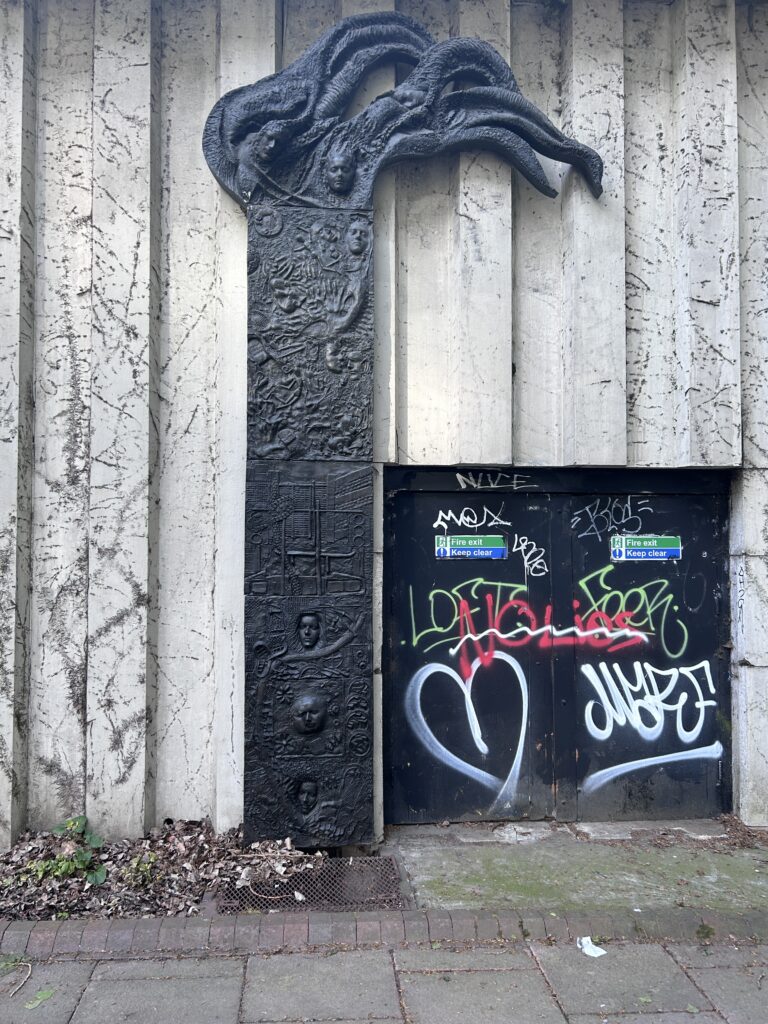
The artwork consists of three large bronze relief panels mounted on a tall white concrete wall. Each panel is intricately designed with smaller sections that depict figures, faces, handprints, boot prints, and various everyday objects. In addition to the bronze panels, the installation features a unique wheel-shaped disc lighting element embedded in the pavement in front of the sculptures.
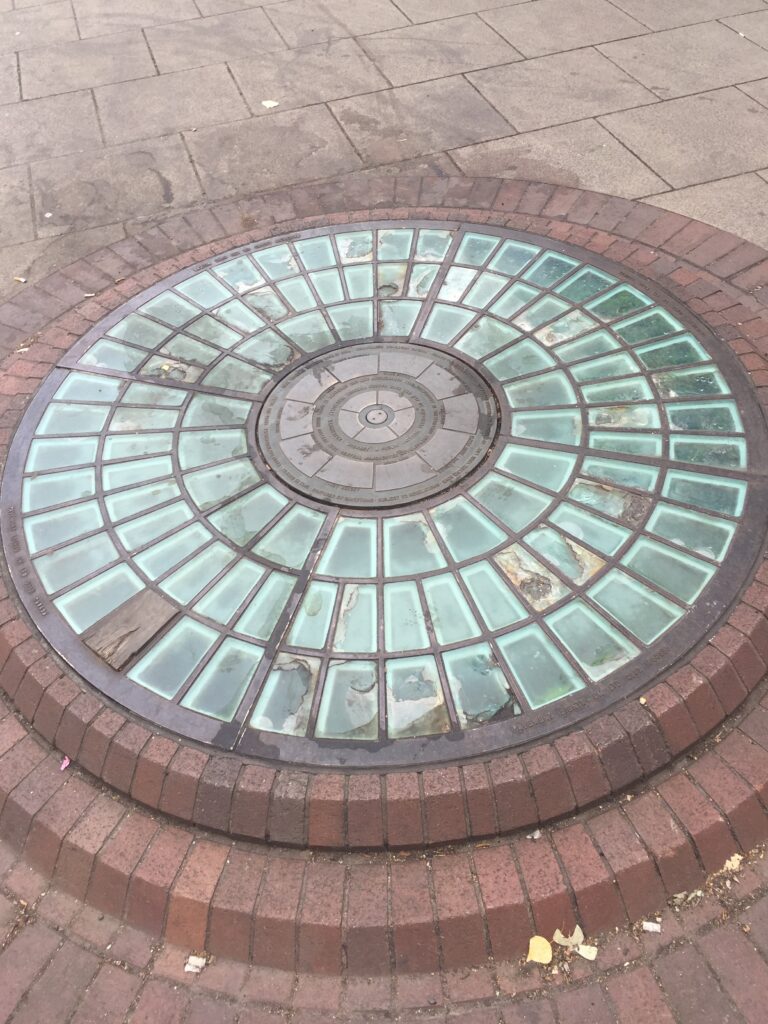
The inscription within the inner circle of the bronze disc: “Journey” A public artwork dedicated to all who have passed through Piccadilly, Manchester
Whereas the outermost part of the disc is inscribed with: PATHS AND PACES. EXPRESSIONLESS FACES. FRAMED IN TIME. CONFUSED BY DIRECTIONS. SUBJECT TO REGULATIONS. EACH CHOOSE YOUR OWN LINE. BUT THERE’S NO PRESSING OBLIGATION. OBSERVE YOUR INCLINATION. TOWARD WHATEVER DESTINATION. THIS IS YOUR PASSAGE THROUGH TIME.
The descriptive elements of this artwork center on the theme of human movement and the varied experiences of individuals navigating the city. This theme is especially relevant due to the piece’s proximity to a significant transportation hub like Piccadilly Station. Additionally, the incorporation of handprints and boot prints, contributed by the community during the artwork’s creation, adds a meaningful local connection.
Who created it?
The artwork resulted from a collaboration between Partnership Art and Sheena Simon College students.
But why?
The Central Manchester Development Corporation (CMDC) was commissioned in 1990 as part of a broader initiative to enhance the city’s collection of civic art. Active from 1988 to 1996, the CMDC played a crucial role in the urban regeneration of Manchester. Established by the central government, it undertook significant redevelopment projects that transformed the city’s landscape and economy. Notable developments during this period include Bridgewater Hall, Manchester Central, and the Science and Industry Museum, along with the comprehensive regeneration of the Castlefield area. Additionally, the CMDC facilitated the creation of over 2,500 new homes in the city center.
The CMDC’s approach to regeneration went beyond physical and economic aspects; it also strategically integrated cultural and leisure facilities, recognising their importance in enhancing the city’s overall attractiveness and vibrancy.
By the mid-1990s, the government dissolved various Development Corporations across the UK, including the CMDC. Following its dissolution, the planning powers formerly held by the corporation were returned to Manchester City Council, while residual properties, rights, and liabilities were transferred to the Secretary of State, as outlined in the statutory instrument.
Conclusion
There’s a wonderful write-up about the Journey on Atlas Obscura, which rightly recognises how remarkable yet disquieting it is.
The area itself is partially unkempt and unloved, with utility cabinets placed carelessly next to the panels and the wheel light in desperate need of repair and re-illumination.
While researching this piece, I wondered who is responsible for the area. Is it still the Secretary of State, Network Rail, or Piccadilly Station, since it appears to be on their land (or at least adjacent to it)? Could it be Manchester City Council or some other entity? If you happen to know, please let me know.